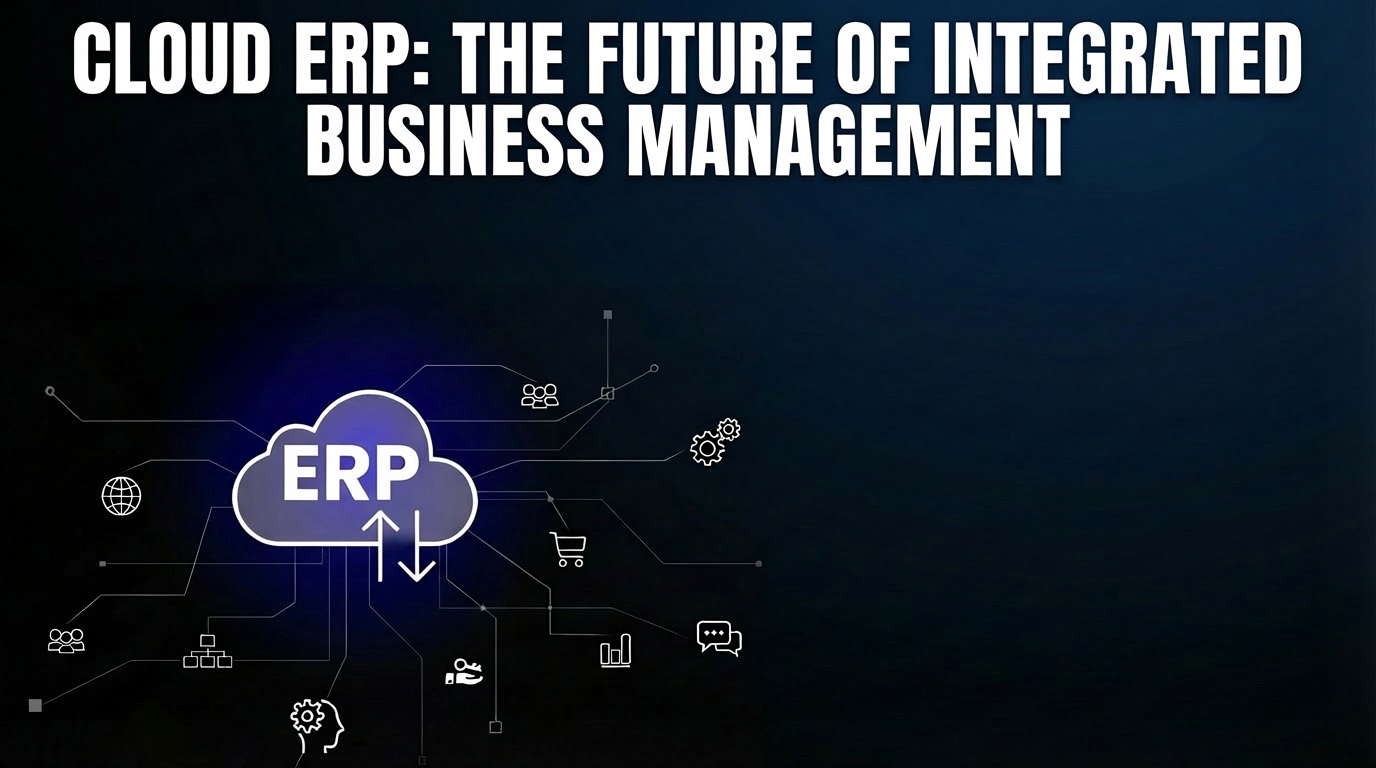
To effectively manage enterprise-wide operations, a strong cloud ERP platform provides a variety of interconnected modules. These systems are designed to facilitate both long-term strategic planning and daily transactions.
For a business to be stable, financial visibility is essential. Real-time accounting, automatic reporting, spending tracking, and paperwork prepared for compliance are all offered by cloud ERP. Without the need for manual reconciliation, organizations may produce financial statements promptly and preserve audit transparency.
Leadership teams can keep an eye on cash flow, assess profitability, and make proactive financial strategy adjustments with the help of integrated budgeting and forecasting tools.
- Supply Chain and Inventory Control
Operational efficiency is directly impacted by efficient supply chain management. Using a single interface, cloud ERP manages order fulfillment, inventory movement, vendor relationships, and procurement.
Among the essential skills are:
- Updates to inventory in real time
- Tools for demand forecasting
- Alerts for automatic replenishment
- Monitoring vendor performance
These characteristics maximize working capital while lowering stock discrepancies and enhancing delivery accuracy.
Inefficiencies arise when workforce operations are managed inside disjointed systems. Payroll, benefits administration, attendance monitoring, and performance reviews are all centralized by cloud ERP.
Organizations can enhance labor planning and cost management by integrating human resource data with financial and operational KPIs.
- Customer and Sales Management
Revenue forecasting relies heavily on sales data. Order processing, billing, customer data, and revenue analytics are all combined into a single framework by cloud ERP. This raises client satisfaction and facilitates better cooperation between the finance and sales departments.
There are quantifiable operational and strategic benefits to implementing cloud ERP. Businesses that switch to cloud-based solutions frequently see increases in productivity and a more competitive edge.
- Improved Operational Efficiency
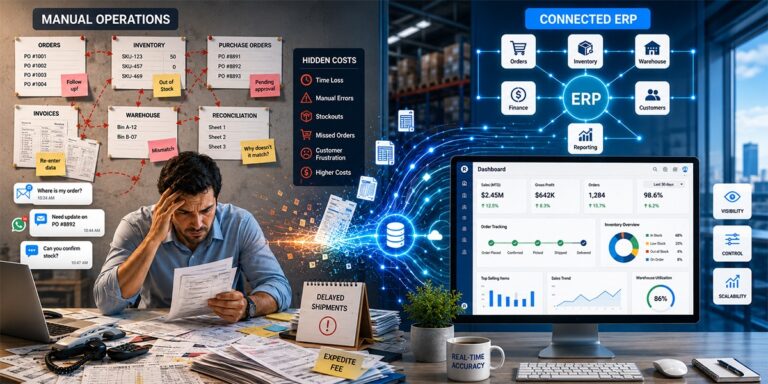
Cloud ERP minimizes redundancies and process delays by doing away with human data entry and disjointed software platforms. Automated workflows improve accuracy across departments and speed up transaction cycles.
- Real-Time Data Accessibility
Performance dashboards are accessible to leadership teams from any secure device. Decision-makers are always working with up-to-date data instead of out-of-date reports thanks to cloud ERP.
Operational complexity rises as firms grow. Without requiring significant system changes, cloud ERP facilitates multi-location management, the creation of new business units, and changing regulatory needs.
- Enhanced Security and Compliance
Data security is essential in the current digital environment. To safeguard confidential company data, cloud ERP providers use automated backup procedures, secure hosting environments, and cutting-edge encryption.
Typical security measures consist of:
- User access depending on roles
- Authentication with many factors
- ongoing system observation
Procedures for disaster recovery
These protections improve both regulatory compliance and operational resilience.
When assessing enterprise solutions, it is crucial to comprehend the differences between on-premises and cloud-based systems.
Conventional ERP systems need specialized IT administration, internal servers, and manual updates. Customization frequently entails large capital expenditures and prolonged downtime.
In contrast, cloud ERP is maintained by the service provider and runs on a subscription-based approach. Automatic deployment of updates guarantees that companies always run the most recent version. This improves cost predictability while lowering technical burdens.
Furthermore, cloud ERP facilitates remote access, which makes it especially advantageous for businesses with dispersed staff or several locations.
Integration Capabilities
For marketing, analytics, payment processing, and customer interaction, modern firms use a variety of software programs. Cloud ERP facilitates smooth third-party platform integration, guaranteeing continuous data synchronization.
Integrated ecosystems enable businesses to:
- Financial reconciliation should be automated.
- Integrate inventory and sales data.
- Integrate performance data
- Get rid of redundant data entering
Departmental strategic alignment and reporting accuracy are improved by this integrated structure.
Implementation Strategy for Cloud ERP
Structured planning and execution are necessary for a successful cloud ERP transformation. Businesses must evaluate their operating demands, determine their scalability requirements, and choose a platform that supports their long-term objectives.
A successful implementation procedure usually consists of:
- Assessment of business processes
- Platform choice and personalization
- Validation and data migration
- Training and onboarding of employees
- Testing of system performance
Return on investment is accelerated and disturbance is reduced with careful planning. Continuous vendor support guarantees that the cloud ERP system develops in tandem with operational and regulatory shifts.
Cost Considerations
Adoption of technology is significantly influenced by financial planning. Cloud ERP lowers initial capital costs by substituting recurring subscription payments for hardware purchases.
Typically, expenses consist of:
- Annual or monthly license fees
- Services for implementation and configuration
- Programs for onboarding and training
Even though subscription prices are recurring, businesses frequently save money over time by lowering internal IT workload and doing away with infrastructure maintenance.
Future Trends in Cloud ERP
The possibilities of cloud ERP are always being improved by the development of corporate technology. Predictive analytics, machine learning, and artificial intelligence are becoming more and more incorporated into contemporary systems.
New developments include:
- Forecasting models powered by AI
- Automated detection of anomalies
- Dashboards for advanced performance
- Improved accessibility on mobile devices
Organizations can transition from reactive management to proactive strategic planning thanks to these advancements. Cloud ERP will continue to be essential to enterprise modernization as digital transformation picks up speed.
Choosing the Right Cloud ERP Partner
Just as crucial as picking the system itself is picking the appropriate technology supplier. Companies should assess a vendor’s long-term support skills, industry knowledge, scalability choices, and dependability.
Important evaluation standards consist of:
- a track record of successful deployment
- Pricing structures that are transparent
- Flexibility in customization
- Continuous technical assistance
- Certifications in data security
A solid collaboration guarantees that the cloud ERP system will continue to provide quantifiable benefits after it is first implemented.
Conclusion
Long-term performance is determined by operational clarity and agility in a data-driven, competitive economy. Disconnected systems create inefficiencies, limit scalability, and increase operational risk. By centralizing business operations within a safe, easily accessible, and expandable digital framework, cloud ERP overcomes these difficulties.
Cloud ERP enables businesses to function with accuracy and assurance by combining financial, supply chain, workforce management, and customer operations. Its subscription-based business model guarantees ongoing innovation through automated updates while easing the strain on infrastructure.
A key technological investment for companies seeking expansion, efficiency, and digital transformation is cloud ERP. Businesses that deploy a strategic cloud ERP system set themselves up for long-term growth, enhanced teamwork, and better decision-making in a market that is becoming more complex by the day.
—————————————————————————————————————————
- What is the cloud ERP system?
An online platform for enterprise resource planning, a cloud ERP system unifies operations, supply chain, finance, and human resources into a single, centralized system.
Without the need for on-premise hardware, it offers scalable infrastructure, automatic updates, and real-time data access.
- What is the difference between cloud ERP and ERP?
The primary distinction is that cloud ERP is hosted online and accessible over the internet, whereas traditional ERP is deployed on on-premise servers.
Compared to traditional ERP systems, cloud ERP offers more flexibility, reduced infrastructure expenses, and automatic updates.
- What are the benefits of cloud ERP?
By centralizing data, automating processes, and enabling real-time departmental visibility, cloud ERP increases operational efficiency.
In order to facilitate long-term business growth, it also provides scalability, improved security, reduced upfront expenses, and automatic updates.
Indeed, SAP provides web-based infrastructure-based cloud ERP solutions like SAP S/4HANA Cloud.
These platforms offer automated upgrades, scalability, and real-time data access for integrated enterprise administration.
Indeed, cloud ERP is built with cutting-edge security features including role-based access, data encryption, and ongoing system monitoring.
It offers robust protection for sensitive company data with automated backups and secure hosting settings.









 Get Started