Introduction: Why Businesses Are Moving Toward ERP Systems
In today’s fiercely competitive marketplaces, success is determined by speed, accuracy, and efficiency. Businesses oversee a variety of functions, including marketing, customer service, procurement, finance, and inventories. Businesses frequently have operational delays, data mistakes, and communication gaps when these systems run independently.
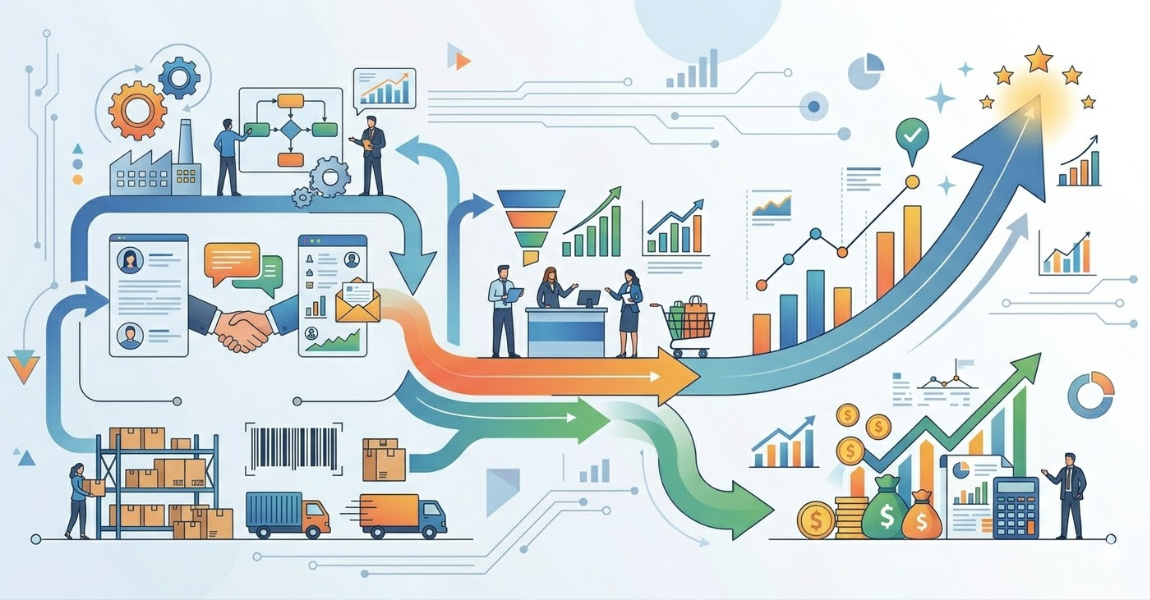
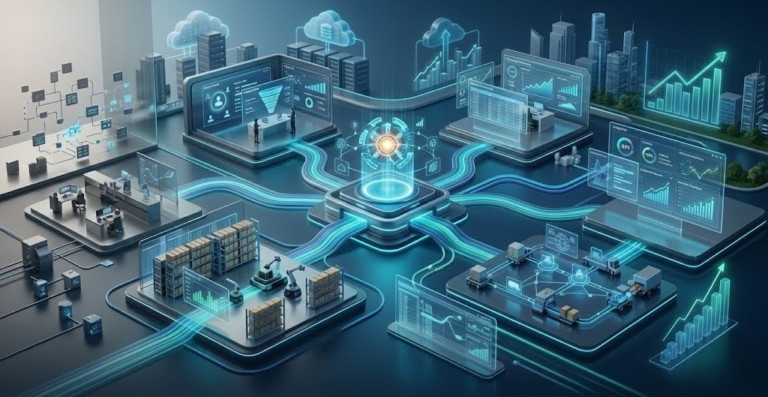
For this reason, enterprise resource planning solutions are being adopted by enterprises all over the world. Beyond simple software automation, ERP Benefits are numerous. ERP systems enable businesses to make better decisions and streamline operations by integrating several departments into a single, unified platform.
Businesses may cut expenses, increase productivity, and scale their operations more successfully if they comprehend the true ERP Benefits. ERP solutions automate operations and offer real-time data to help businesses develop more quickly rather than depending on manual processes.
For any company contemplating a digital transformation, understanding the Strategic ERP Benefits is crucial.
Understanding ERP Benefits
The benefits that businesses receive from using an enterprise resource planning system that unifies many corporate operations into a single platform are referred to as ERP benefits.
ERP systems link several departments, such as:
- Finance
- Inventory control
- Operations in the supply chain
- Management of customers
- Marketing and sales
Increased operational effectiveness, increased data accuracy, and quicker decision-making are just a few of the ERP Benefits of combining these processes.
Companies that fully utilize the ERP Benefits have more insight into their operations, which enables executives to spot areas for expansion and progress.
Key ERP Benefits That Drive Business Growth
ERP solutions are adopted by organizations because of the numerous operational and strategic benefits they offer.
- Improved Operational Efficiency
Improved operational efficiency is one of the most significant ERP Benefits. ERP systems do away with manual data entry and automate repetitive operations.
Businesses benefit from automation:
- Minimize human error
- Expedite business procedures
- Get rid of redundant data entering
- Enhance departmental cooperation
These enhancements free up staff members to concentrate on strategic work instead of administrative duties.
- Real-Time Business Insights
Real-time access to corporate data is another significant benefit of ERP Benefits. Decision-making is typically delayed by the manual reporting requirements of traditional systems.
ERP systems offer real-time dashboards that assist companies in keeping an eye on:
- Sales results
- Levels of inventory
- Client demand
- Financial indicators
Organizations can make decisions more quickly and intelligently when they have direct access to data.
- Better Inventory Management
For distribution and product-based enterprises, inventory control is essential. The ability to track inventories effectively is one of the most valuable ERP Benefits.
ERP systems enable companies to:
- Track stock levels in real time
- Prevent shortages or overstocking
- Monitor the flow of goods between warehouses
- More precise demand forecasting
These skills assist businesses in lowering operating expenses and maintaining effective supply networks.
ERP Benefits for Distribution Businesses
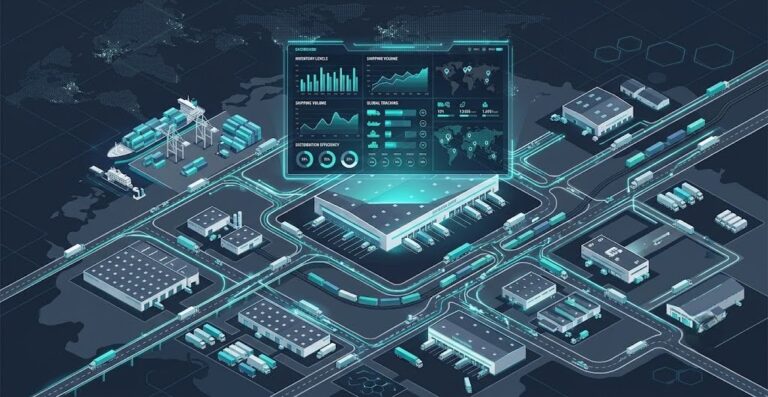
Distribution firms frequently manage intricate logistics involving consumers, suppliers, and warehouses. Significant operational problems might result from even a minor data inaccuracy.
For distributors, there are specific ERP Benefits, such as:
- Automated order fulfillment
- Adaptable workflow administration
- Pricing models tailored to individual customers
- Adherence to tax laws
These characteristics assist distribution companies increase productivity while lowering operational risks.
Many contemporary ERP systems enable businesses to launch in a matter of weeks, resulting in quicker and more effective implementation.
ERP Benefits for B2B Ecommerce Integration
The way firms sell goods has changed as a result of digital commerce. Consumers today anticipate quick ordering procedures and easy online shopping options.
The seamless connectivity with B2B e-commerce platforms is one of the most potent ERP benefits.
E-commerce platforms with ERP integration offer:
- Online ordering is available around-the-clock
- Capability for bulk ordering
- Pricing models tailored to individual customers
- Connection with current business systems
- Intelligent demand forecasting
These features enable companies to make sales even beyond regular business hours.
Businesses that take advantage of these ERP Benefits build digital ecosystems where customers can explore, order, and get goods with ease.
ERP Benefits for Marketing and Customer Engagement
ERP systems help marketing teams by offering insightful and useful customer data.
Marketing automation and client involvement are two additional ERP Benefits with effective connection.
ERP data can be used by marketing teams to:
- Send notifications when products are replenished or new
- Run focused advertising campaigns
- Develop marketing plans before trade exhibitions
- Find fresh market prospects
ERP data increases the effectiveness of communication channels including message platforms, email marketing, and SMS notifications.
These features enable companies to connect with the right clients at the right moment.
ERP Benefits for Ecommerce Website Maintenance
Long-term digital success depends on maintaining a high-performance e-commerce platform. ERP systems facilitate continuous website optimization and management.
ERP Benefits for maintaining e-commerce include:
- Pricing updated in real time
- Quick adjustments to product listings
- Rapid resolution of technical problems
- Infrastructure for a safe online store
- Ongoing search engine optimization
These features help companies maintain the competitiveness and dependability of their online stores.
Businesses that invest in these ERP Benefits enhance client satisfaction while protecting their online revenue sources.
ERP Benefits for POS Integration
Retail companies frequently oversee both offline and online sales channels. A unified commerce environment is produced by integrating ERP platforms with point-of-sale systems.
POS integration has several significant ERP Benefits, including:
- Quicker checkout processes
- Automated synchronization of inventories
- Real-time sales data
- Management of loyalty awards
- Automated tax computations
Businesses may fully see their sales success by integrating retail operations with ERP platforms.
Organizations can increase customer satisfaction and operational efficiency with the use of these linkages.
ERP Benefits for Quick Commerce
Consumer demands for convenience and speed are always rising. Companies have to promptly adjust to these needs.
Several significant ERP Benefits are offered by quick commerce solutions backed by ERP systems.
Among them are:
- Building internet retailers quickly
- Updates on prices in real time
- Options for delivery and pickup
- POS systems and inventory synchronization
- Mobile-friendly shopping
These characteristics enable companies to retain operational efficiency while reacting swiftly to market demand.
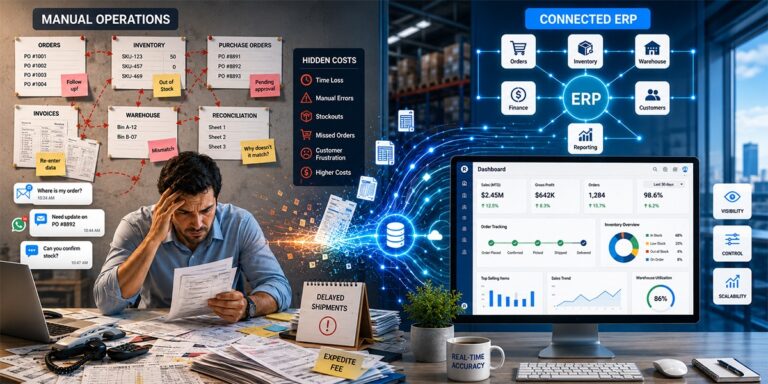
Common Challenges Businesses Face Without ERP
Businesses that depend on disjointed systems frequently encounter significant operational difficulties.
Without ERP systems, companies can encounter:
- Duplication of data between departments
- Manual mistakes in financial documents
- Sluggish reporting procedures
- Restricted operating visibility
- Ineffective inventory control
Knowing these difficulties makes it clear why so many businesses are spending money on ERP systems.
The costs of antiquated systems are significantly outweighed by the long-term ERP Benefits.
Best Practices to Maximize ERP Benefits
Businesses should adhere to a number of best practices in order to fully utilize ERP systems.
- Define Clear Business Objectives
Organizations must decide what they hope to accomplish before putting ERP solutions into place. Having specific goals helps you get the most out of ERP Benefits.
- Prepare Data for Migration
ERP adoption success is ensured by accurate and clean data. Businesses can completely benefit from operational ERP Benefits with the right data preparation.
- Train Employees Effectively
Adopting ERP successfully requires employee training. Organizations reap the greatest ERP Benefits when teams know how to use the system appropriately.
- Monitor and Optimize Continuously
ERP systems need to be continuously monitored and improved. The long-term ERP Benefits of a company’s IT investments can be maintained with regular reviews.
The Future of ERP Benefits
Enterprise technology is still developing quickly, adding new features that increase the usefulness of ERP systems.
Possibly upcoming ERP Benefits:
- Analytics powered by artificial intelligence
- Forecasting demand with prediction
- Automated optimization of the supply chain
- Ecosystems for integrated digital commerce
Businesses that implement these innovations will increase their competitive edge and operational effectiveness.
Conclusion: Unlock Business Growth Through ERP Benefits
Today’s businesses need integrated solutions that facilitate digital transformation, increase accuracy, and streamline processes. The basis for accomplishing these objectives is provided by ERP technology.
Beyond operational automation, the strategic ERP Benefits are numerous. ERP solutions help businesses develop scalable business models, improve customer experiences, and make better decisions.
ERP systems are essential to the success of modern businesses, from streamlining distribution processes to enabling sophisticated e-commerce platforms and marketing automation.
Businesses that fully utilize the ERP Benefits open up new growth prospects and have more control over their operations.
Now is the ideal moment to investigate ERP systems if your business is prepared to decrease human errors, streamline operations, and create a digital foundation that is ready for the future.
Get in touch with our team right now to find out how our digital transformation solutions, e-commerce integration services, and ERP knowledge may help your company reach operational success. Make an appointment for a strategy call or consultation to begin creating a more intelligent and effective business ecosystem right now.








 Get Started