Introduction: Why Businesses Need ERP Expertise
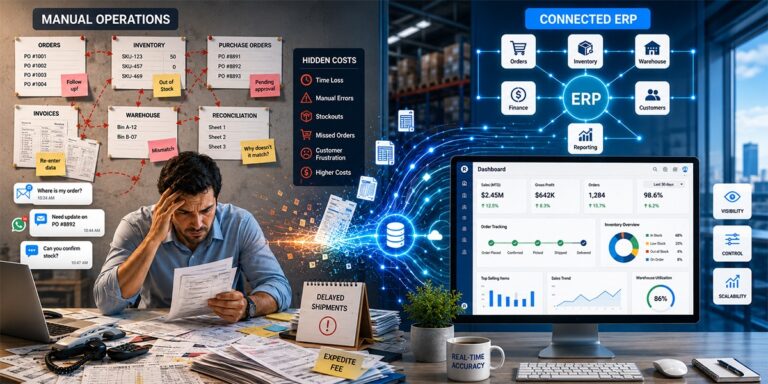
Several departments must collaborate effectively in the complicated environments that modern organizations operate in. Sales, inventory, supply chain, finance, and customer management all produce vital data that needs to be integrated instantly. Businesses frequently experience delays, data mistakes, and operational inefficiencies when these systems function independently.
An ERP Consultant is crucial in situations like these. Organizations rely on ERP specialists to create systems that complement their long-term growth strategy and operational objectives rather than just deploying software.
A qualified ERP Consultant assists companies in assessing current processes, spotting inefficiencies, and putting enterprise resource planning solutions into place that unify all divisions into a single platform.
Organizations may automate procedures, lower operational mistakes, and improve data management when they collaborate with an experienced ERP Consultant. The function of an ERP consultant becomes more crucial as businesses develop and increase their online presence in order to guarantee scalable and effective business operations.
Understanding the Role of an ERP Consultant
What is an ERP Consultant?
An ERP Consultant is a business and technology professional who assists companies with the design, implementation, customization, and optimization of enterprise resource planning systems.
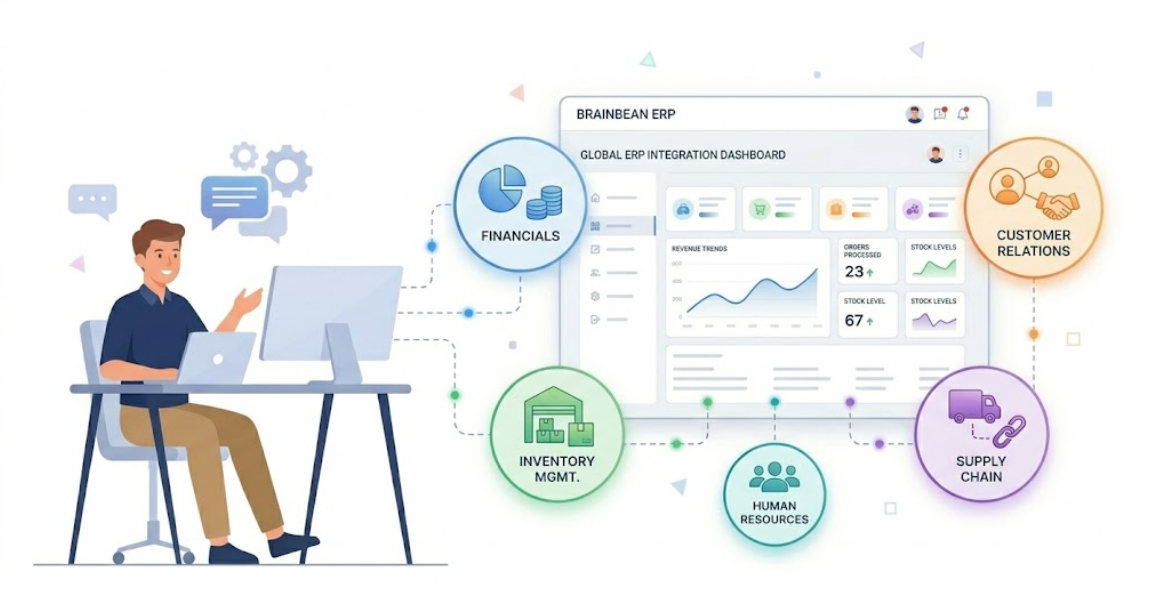
ERP systems link several departments, including customer interactions, inventory management, finance, and procurement. The smooth operation of these systems is ensured by an ERP consultant.
An ERP Consultant mostly performs the following tasks:
- Examining business procedures
- Suggesting appropriate ERP solutions
- Setting up ERP software
- Overseeing the transfer of data
- Educating staff members on how to use the system
- Supplying continuing technical assistance
An ERP Consultant makes sure that the system provides actual operational value by assisting companies with every step of ERP installation.
Why Businesses Need an ERP Consultant
Without the right assistance, ERP software implementation might result in expensive errors, unfinished integrations, or system outages.
By offering technical know-how and strategic planning, a qualified ERP Consultant assists businesses in avoiding these dangers.
Businesses use ERP consultants for a number of important reasons, such as:
- Increasing the effectiveness of operations
- Decreasing errors in manual data entering
- Centralizing corporate data
- Automating monotonous jobs
- Making real-time reporting possible
Businesses may retain accurate and trustworthy data across all departments with the assistance of an ERP Consultant, streamlining operations.
ERP Consultant Services for Distribution Businesses
Complex supply chains including suppliers, warehouses, logistics partners, and customers are frequently managed by distribution organizations. Significant financial losses can result from even a tiny human data entry error.
Distribution businesses can install ERP solutions tailored to their industry with the assistance of a skilled ERP Consultant.
The following are crucial ERP features for distributors:
- Automated order processing
- Pricing models tailored to individual customers
- Sophisticated tracking of inventories
- Adaptable arrangement of the workflow
- Reporting on state taxes and compliance
Distribution businesses may put systems in place that lower operational risks and boost productivity with the help of an ERP Consultant.
Businesses may go live in weeks instead of months thanks to the rapid deployment of many ERP solutions made for distributors.
Integrating Ecommerce with ERP Systems
Customers today demand quick and easy shopping experiences. Companies that only use manual order processes run the risk of losing clients to rivals who use online ordering services.
In order to create seamless digital experiences, businesses can integrate ERP platforms with e-commerce systems with the assistance of an ERP Consultant.
Among the main advantages of e-commerce integration are:
- Online ordering is available around-the-clock
- Location-based and customer-specific pricing
- Options for businesses to order in bulk
- Connection with internal inventory and accounting systems
- Intelligent forecasting prior to placing orders
Businesses can create e-commerce platforms that produce revenue even after typical business hours with the help of an ERP Consultant.
Marketing Benefits of ERP Integration
ERP systems offer useful insights that complement marketing initiatives in addition to being operational tools.
Businesses that partner with an ERP Consultant have access to customer data that can enhance marketing strategies.
ERP insights can be used by marketing departments to:
- When products are back in stock, let customers know
- Encourage the introduction of new products
- Launch focused email marketing campaigns
- Prior to important trade events, arrange promotions
These data-driven marketing initiatives assist companies in expanding their clientele while fortifying their bonds with current clients.
Marketing systems must be effectively integrated with ERP platforms for effective data sharing amongst departments, according to an experienced ERP Consultant.
Ecommerce Website Maintenance and ERP Support
Establishing an e-commerce platform is just the beginning of creating a profitable online business. The platform is kept safe, current, and performance-optimized by ongoing maintenance.
Systems that facilitate long-term e-commerce maintenance are frequently suggested by an ERP Consultant during ERP setup.
Among the crucial maintenance skills are:
- Updates on prices in real time
- Same-day updates to product listings
- Prompt technical assistance for problems
- Safe infrastructure for websites
- Ongoing enhancements to SEO
Businesses can make sure their e-commerce platforms stay lucrative and competitive with the right assistance from an ERP Consultant.
POS Integration and ERP Consultant Expertise
Retail companies frequently run both online and physical locations. Businesses can effectively manage these channels by integrating point-of-sale systems with ERP platforms.
Businesses can link POS systems with backend operations with the aid of a skilled ERP Consultant.
Among the advantages of POS integration are:
- Quicker checkout processes
- Synchronization of inventory in real time
- Reporting on sales and profits
- Management of loyalty awards
- Automated tax computations
Businesses get total insight across all of their sales channels when POS systems are connected with ERP platforms.
Businesses can increase customer happiness and operational effectiveness with this cohesive approach.
Quick Commerce and Digital Transformation
Consumer expectations are still changing quickly. Customers today anticipate quicker ordering processes and instant access to product details.
An ERP Consultant enables firms to swiftly create digital storefronts by assisting them in implementing quick commerce strategies.
Quick commerce solutions include several important features, such as:
- Opening e-commerce sites in a single day
- Updates on prices in real time
- Options for delivery and pickup
- POS systems and inventory synchronization
- Mobile-friendly shopping
Businesses may swiftly adapt to market demands and seize new revenue opportunities with the assistance of an ERP Consultant.
Common Challenges Without an ERP Consultant
Businesses that try to deploy ERP without professional assistance frequently run into a number of issues.
These difficulties could consist of:
- Improper setup of the system
- Mistakes in data migration
- Failures in integration
- Employee opposition to new procedures
- Budget overruns and project delays
By offering organized implementation strategies and technical know-how, a competent ERP Consultant assists firms in avoiding these problems.
Best Practices When Working with an ERP Consultant
Businesses should adhere to specific best practices in order to optimize the benefits of ERP installation.
Define Clear Business Objectives
Businesses should decide what they hope to accomplish before beginning an ERP implementation. The system can then be created to support these goals by a qualified ERP Consultant.
For ERP installation to be effective, accurate data is necessary. Prior to working with an ERP Consultant to move their data into the new system, businesses should organize and clean their data.
ERP systems have an impact on several departments. After the ERP Consultant finishes the implementation, training makes sure that staff members know how to use the system properly.
Focus on Long-Term Optimization
ERP systems need to be continuously improved. To frequently assess system performance and find areas for improvement, businesses should collaborate with an ERP Consultant.
The Future of ERP Consulting
ERP systems are getting smarter and more adaptable as enterprise technology advances quickly.
The future of ERP consulting services is being shaped by a number of trends.
Among these trends are:
- Analytics driven by artificial intelligence
- Supply chain management that is predictive
- Ecosystems for integrated e-commerce
- Sophisticated business automation
While preserving reliable and effective operations, an expert ERP Consultant assists firms in implementing these technologies.
Building a Long-Term ERP Strategy
Instead of viewing ERP as a one-time software project, successful companies view it as a long-term strategic investment.
Businesses can create systems that expand with their operations by working with a professional ERP Consultant.
An effective ERP plan consists of:
- Ongoing system updates
- Incorporation of digital platforms
- Continuous training for employees
- Tracking and improving performance
These procedures guarantee that ERP systems continue to function well when companies introduce new goods or enter new markets.
Conclusion: Transform Your Business with the Right ERP Consultant
Businesses want integrated systems that link operations, boost productivity, and foster expansion in the current digital economy. ERP adoption can become complicated and challenging to handle without the proper plan.
Designing, implementing, and optimizing enterprise systems that support long-term performance requires the skills of a qualified ERP Consultant.
ERP systems are essential to contemporary corporate transformation because they facilitate marketing automation, integrate e-commerce platforms, and improve distribution procedures.
A competent ERP Consultant may help businesses automate procedures, lower operational errors, and confidently grow their operations.
Now is the ideal moment to take action if your business is prepared to increase productivity, simplify processes, and lay the technological groundwork for future expansion.
Get in touch with our team right now to see how our e-commerce integration services, ERP systems, and knowledge of digital transformation may help your company. Make an appointment for a strategy call or consultation to learn how the ideal ERP system might open up new growth prospects.









 Get Started